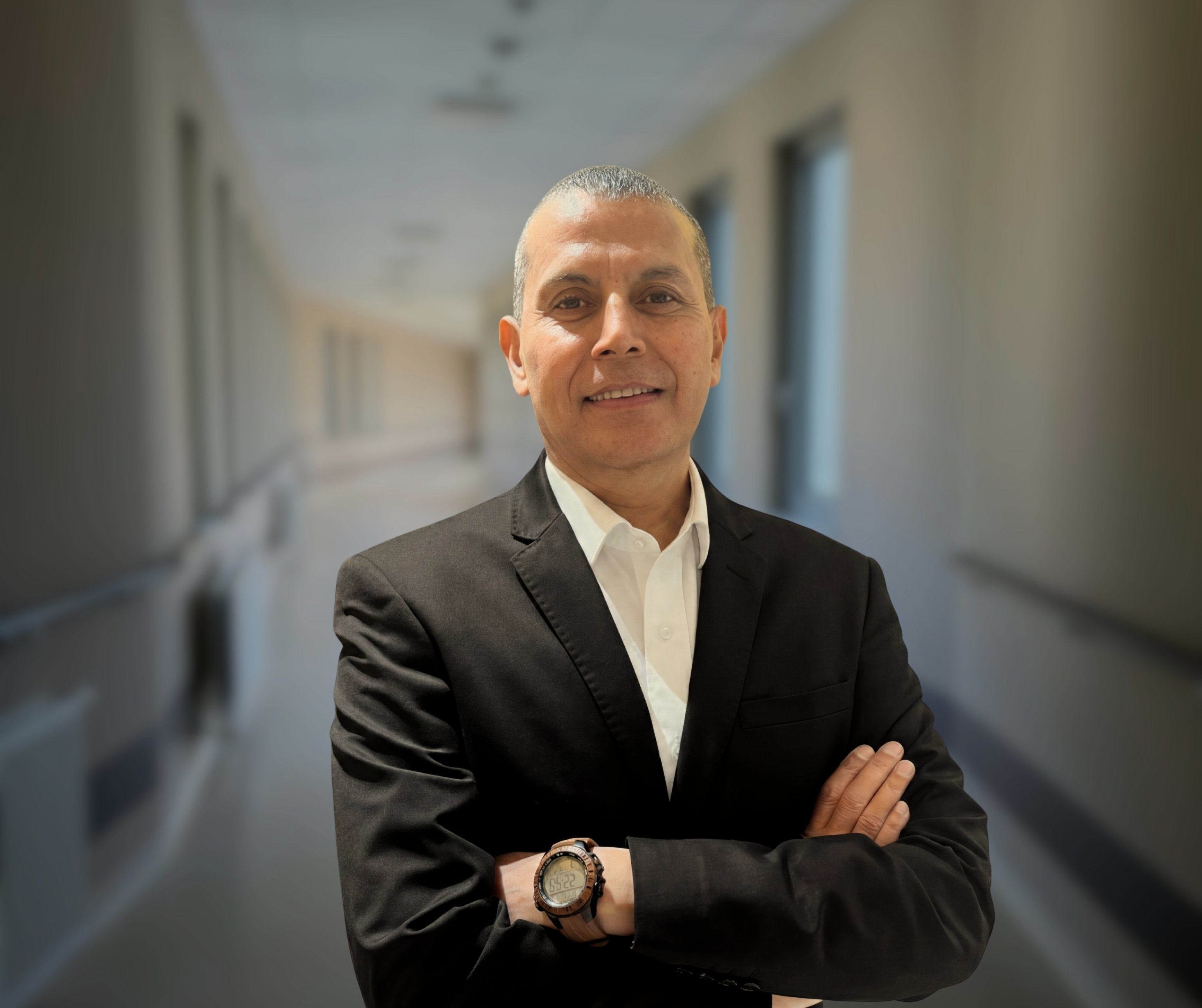
Jitendra Sharma

  • Jun. 08, 2026

TownHall 2
Jitendra1

Jitendra Sharma

Director of Operations – Facilities Management

 Transforming workplaces through innovation and care

Real Estate management has now moved into a boardroom strategic direction setting to make people and buildings productive. Clients are looking for strategic partners who can help them manage their entire workplace ecosystem — companies that operate as an extension of their business and support broader organizational priorities.

From Support Function to Strategic Driver: Why the Future of Facilities Management is Human-Centered, Digital, and Built for Impact  

When clients are able to run business efficaciously, workplaces run seamlessly, — collaboration flows without disruption; assets and systems function seamlessly, and employees feel safe, comfortable, and supported—few stop thinking about the teams making it all possible. Yet behind every high-performing workplace is a complex ecosystem powered by strategy, innovation, and people.

 At Sodexo, we recognize the professionals shaping the future of workplace management, and few understand this transformation better than  Jitendra Sharma, Director of Operations.

Town Hall

A Career Built Around People

Having spent over three decades in real estate management, managing complex operations for Fortune 500, Jitendra has witnessed firsthand how Real Estate (RE) management has evolved from a behind-the-scenes support role into a critical strategic business function. 

Jitendra has built a career leading complex operations across multiple markets globally. Of those three decades, he has spent nine years with Sodexo managing global strategic accounts and is now with Sodexo Philippines bringing a change and transformation to the Philippines RE business for clients. Prior to his role in the Philippines, he led strategic partnership with Telcom, FMCG clients globally and APMEA.  He led the Vietnam, South Korea business as the Segment Director. 

Jitendra’s leadership journey commenced into RE management across diverse markets and culture, but what kept him in the industry was never just buildings—it was People. 

“At its core, real estate and facilities management are people's businesses,” he shares. “You work with large teams across multiple markets, manage diverse client relationships, and lead people toward achieving Sodexo’s and client value proposition with mutual business outcomes.” 

For him, leadership in facilities management is about balancing business excellence with human connection; building strong teams while cultivating trusted client partnerships.

The Evolution of Facilities Management: From Cost Center to Boardroom Strategy 

When Jitendra began his career, facilities management was rarely seen as strategic. “Back then, facilities management didn’t have a place in the boardroom,” he explains.  It was often viewed as a support function; focused primarily on maintenance and operational continuity. Today, that has changed dramatically. 

Organizations now recognize that workplaces directly influence: 

  • Talent attraction and retention  
  • Employee productivity  
  • Collaboration  
  • Brand perception  
  • Workplace experience  
  • Business performance 

    A workplace today is no longer just a physical location; it reflects an organization’s brand. “The workplace is a statement of the brand,” Jitendra explains. “Sometimes even the office address alone motivates people to want to join a company.” He emphasizes that workplace strategy now requires close alignment between human resources and corporate real estate teams to create environments where employees feel engaged, productive, and connected. A well-managed workplace should feel like a place where people want to be; where they feel productive and valued.” And perhaps his most compelling measure of workplace success:

Thetruemeasureofagreatworkplaceiswhenpeopledisconnectafterworkbutstillfeelexcitedtoreturnthenextday.
jitendra-sharma
Jitendra Sharma
Town Hall3

What Makes Sodexo Different

 As client expectations evolve, traditional facilities providers are being challenged to deliver more than operational support. According to Jitendra, Sodexo stands apart because of its ability to combine workplace expertise with the humane touch. 

“Sodexo touches both the hearts and minds of the client and the operatives,” he says. Its leadership in food services gives the company a unique advantage because food remains one of the most important aspects of people’s daily lives and workplace experiences. 

Combined with its facilities management expertise, this creates a differentiated value proposition centered on improving quality of life. Sodexo also brings: 

  • Global expertise with local execution
  • Flexible service delivery models
  • Full-suite integrated services
  • Strong partnerships with global clients, including leading pharmaceutical organizations
  • A focus on value creation beyond operational delivery

    This aligns closely with Sodexo’s Better Tomorrow 2028 commitments, creating sustainable, people-first workplaces that enhance wellbeing while driving long-term value for clients. 

Driving Innovation Through Operational Excellence 

Modern facilities management requires constant innovation. At Sodexo, this includes its Business Improvement and Growth Support (BIGS) framework, which helps deliver continuous improvements across:

  • Technical services
  • Project management
  • Operational excellence
  • Asset Management Framework
  • Value creation at the core  

As an example, Jitendra shares Sodexo’s unique proposition. Rather than applying temporary fixes, the team uses an Asset Management Framework that evaluates asset lifespan, diagnostics, maintenance schedules, and long-term replacement planning. This allows teams to solve root causes, not symptoms, and take informed decisions.  “We don’t just respond to issues; we build systems & processes that prevent them.” 

Managing Change in a Complex Environment 

Facilities management transformation is not just operational; it is deeply cultural. Many organizations transitioning to outsourced models face resistance to change. Jitendra explains that success requires more than technical expertise. It requires communication, governance, and trust-building. “There’s no competition between us and our clients; it’s a Mutual Partnership with joint Value Proposition.

The Future of Real Estate Management in the Philippines

Looking ahead, Jitendra believes the future of RE management will be shaped by: 

  • Artificial Intelligence  
  • Digitalization  
  • IoT-enabled workplaces  
  • Data-driven decision-making  
  • Operational efficiency  

    Smart sensors, AI-powered analytics, and intelligent workplace systems are already helping organizations better manage space utilization, workplace efficiency, and employee experience. For example, sensors can help monitor meeting room utilization for efficient space utilization.  And despite growing conversations around AI replacing jobs, Jitendra sees technology differently.

JPMC Town Hall

“AI doesn’t take jobs away; it helps people transform to enhance their skill sets.”

He compares today’s AI transformation to the introduction of computers decades ago. At that time, many feared computers would replace human roles. Instead, people adapted to the change and now computers are an extension of not only business but our lives. 

“Did people lose their jobs? No. We upskilled ourselves. Today, laptops help run our businesses. AI will be no different,” he said. For facilities professionals, this means embracing smart building systems, predictive maintenance tools, automation platforms, and data-driven decision-making capabilities that improve efficiency and elevate service delivery.  The future lies in embracing technology while continuously evolving our capabilities. May it be AI, digitization and automation, the human interface cannot be replaced.  

A Career That Quietly Changes Lives 

For Jitendra, RE management remains one of the most dynamic industries because of its ability to create an impact on the ways to do business. “It’s a very gratifying industry,” he says. “You manage people, clients, expectations, and lead   the corporate strategy to improve the quality of doing business and the life of people delivering it. And while the work may often go unnoticed, its impact is undeniable. 

“Our work may be subtle, but the impact is big. A well-managed workplace should feel like a second home; an environment where people feel comfortable, valued, and empowered to perform at their best. As workplaces continue to evolve, human resources and real estate must work in sync to drive productivity, engagement, and talent retention. Workplace strategy is no longer just about physical spaces; it’s about enabling people to thrive, and facilities management serves as the critical bridge that makes that possible.” 

Recognizing the Invisible Workforce Behind Every Workplace 

This Global Facilities Management Day, it’s worth recognizing that facilities teams are often the invisible force behind business productivity and continuity.  They ensure employees walk into safe, productive workplaces. 

They solve problems before they become disruptions. They create environments where businesses can focus on growth. And as the industry continues to evolve, one thing remains clear: facilities management is no longer simply operational; it is strategic, technology-driven, and deeply human-centered. 

As Jitendra puts it, the impact may be subtle, but it is undeniably significant.  And that’s exactly why facilities professionals deserve to be celebrated. 

ajs2